
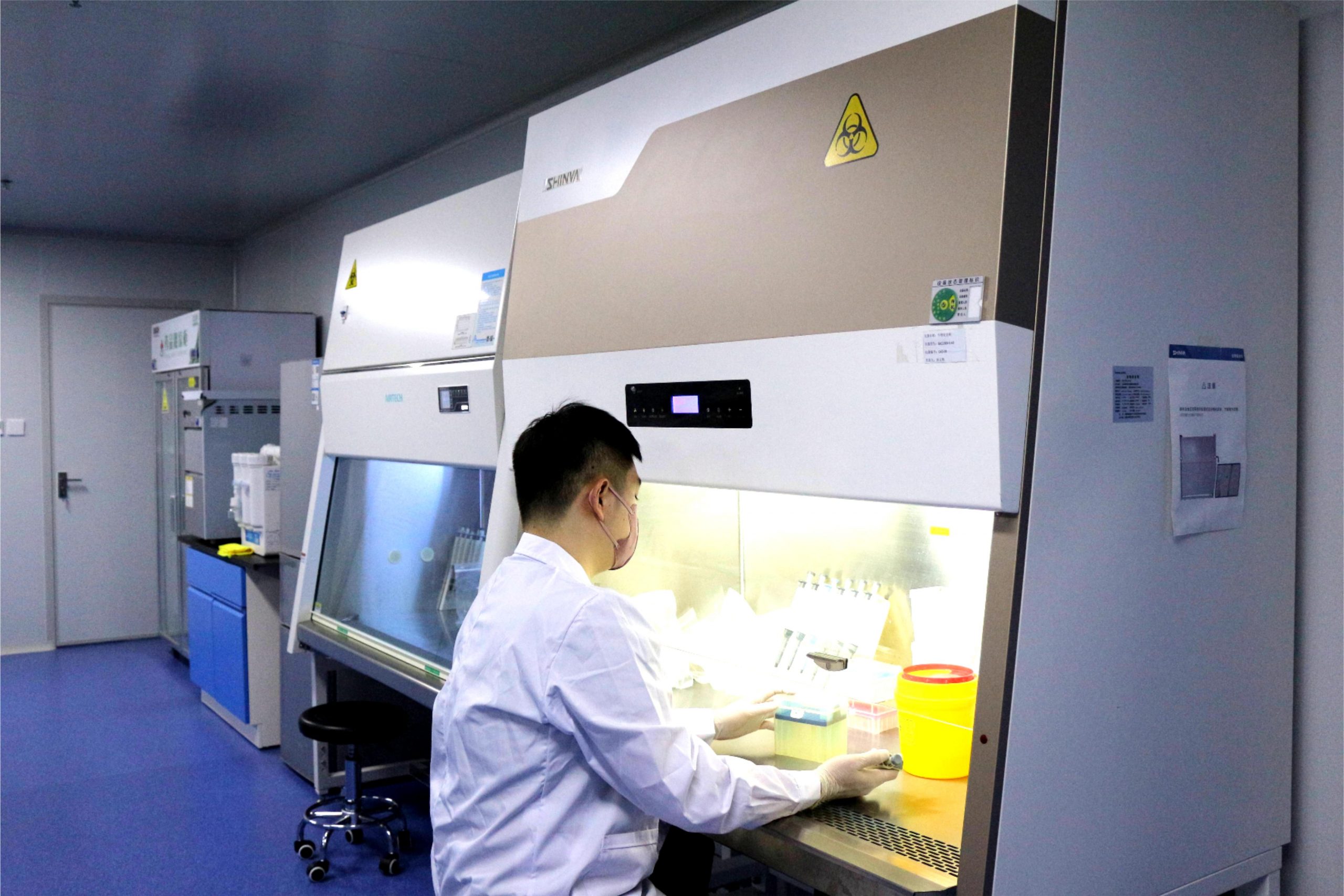
1. PCR กับ ELISA: หลักการและการเปรียบเทียบการทดสอบนก
1.1 พีซีอาร์ (ปฏิกิริยาลูกโซ่โพลีเมอเรส)
PCR เป็นเทคนิคอณูชีววิทยาที่ใช้ในการขยายลำดับ DNA หรือ RNA เฉพาะ. หลักการสำคัญเกี่ยวข้องกับการทำให้ DNA เสื่อมสภาพ, ไพรเมอร์หลอม, และการขยายโดย DNA polymerase ผ่านการหมุนเวียนด้วยความร้อน, ส่งผลให้เกิดการขยายลำดับเป้าหมายแบบเอ็กซ์โปเนนเชียล (อยู่ในภาวะฟองสบู่ & Faloona, 1987). For RNA viruses (เช่น, avian influenza), a reverse transcription step is required, known as RT-PCR.
1.2 ELISA (Enzyme-Linked Immunosorbent Assay)
ELISA is an immunological method based on the specific binding between antigens and antibodies. It is used to detect antibodies (indicating exposure or immune response) or antigens (such as virus or bacterial proteins) in biological samples (Engvall & Perlmann, 1971).
2. PCR เทียบกับ. ELISA: Comprehensive Comparison in Avian Testing
| Category | พีซีอาร์ | ELISA |
|---|---|---|
| Target | DNA or RNA (pathogen genome) | Antibodies or antigens |
| Result Type | Presence/absence of specific gene sequences (can be quantitative) | Presence/absence of immune response (can be quantitative) |
| Sensitivity & Specificity | Very high | Moderate to high, depending on antibody quality |
| Technical Complexity | High; requires molecular biology lab | Moderate; suitable for immunology lab |
| Cost | Higher (instruments and reagents) | Lower; suitable for high-throughput screening |
| Equipment Required | PCR thermocycler, electrophoresis or qPCR machine | ELISA reader, plate washer |
| Time to Results | Few hours | Few hours |
| Best Use Cases | Virus detection, sexing, genotyping | Vaccine evaluation, immune monitoring |
| อ้างอิง | Spackman et al., 2002; Kidd et al., 2015 | OIE, 2021; Saif, 2020 |
3. Practical Applications in Bird Testing – Focus on Pigeons
3.1 Viral Detection in Pigeons (พีซีอาร์)
In pigeon farming, viral diseases like pigeon paramyxovirus (PPMV), herpesvirus, and adenovirus are serious threats. We routinely use PCR to screen for these viruses by extracting RNA from oral and cloacal swabs and applying RT-PCR. Environmental samples (เช่น, drinking water, litter, air filters) are also tested for surveillance.
Why use PCR?
PCR enables early detection, even in asymptomatic carriers (Alexander, 2000).
Crucial for breeding pigeons and racing pigeons to prevent cross-infection.
Fast turnaround time helps rapid decision-making (Kidd et al., 2015).
3.2 Pigeon Sex Determination (พีซีอาร์)
Birds have ZW sex chromosomes (female: ZW; male: ซซ). PCR can differentiate sex by targeting CHD1 genes located on both chromosomes, which differ in size. After amplification and gel electrophoresis, males (ซซ) show one band, females (ZW) show two (Griffiths et al., 1998).
Why use PCR for sexing?
Juvenile pigeons are visually indistinguishable by sex.
Precise sexing is vital for pairing in breeding programs.
3.3 Performance Gene Screening in Pigeons (พีซีอาร์)
Studies suggest certain genes (เช่น, ACTN3, PPARGC1A) may relate to flight endurance and muscle development in birds. PCR can identify these genotypes, assisting in selective breeding for racing performance (Cieslak et al., 2011).
3.4 Vaccine Efficacy Monitoring (ELISA)
After vaccination (เช่น, against pigeon paramyxovirus), ELISA is used to assess whether sufficient antibodies have been produced, determining the effectiveness of the immunization.
Why ELISA?
Cost-effective for batch testing
Moderate sensitivity; good for evaluating antibody duration
Assesses immune coverage and detects “vaccine failure” (Saif, 2020)
ตัวอย่างเช่น, ELISA can be used on 100 pigeons at 7, 14, และ 28 days post-vaccination. If titers are below the protective level, re-vaccination or protocol adjustment may be required.
4. Summary of Pros and Cons
| วิธี | ข้อดี | ข้อจำกัด |
|---|---|---|
| พีซีอาร์ | High sensitivity/specificity; suitable for early detection, genotyping, sexing | Costly, technically demanding |
| ELISA | Cost-effective for large-scale screening; ideal for post-vaccine evaluation | May show false negatives or cross-reactivity |
5. Application Scenarios at a Glance
| Scenario | Recommended Method | Reason |
|---|---|---|
| Early outbreak detection in loft | พีซีอาร์ | Detects low viral load quickly |
| Post-vaccine antibody evaluation | ELISA | Scalable and affordable |
| Juvenile pigeon sexing | พีซีอาร์ | Fast and reliable |
| Checking past infection status | ELISA | Detects antibodies from exposure |
| Environmental surveillance | พีซีอาร์ | Sensitive to viral RNA in air/water |
อ้างอิง
Alexander, ดี. เจ. (2000). Newcastle disease and other avian paramyxoviruses. Revue scientifique et technique (International Office of Epizootics), 19(2), 443-462.
Cieslak, ม., Reissmann, ม., Hofreiter, ม., & Ludwig, ก. (2011). Colours of domestication. Biological Reviews, 86(4), 885-899.
Engvall, E., & Perlmann, P. (1971). Enzyme-linked immunosorbent assay (ELISA): Quantitative assay of immunoglobulin G. Immunochemistry, 8(9), 871–874.
กริฟฟิธส์, ร., สองเท่า, ม. ค., อ, เค., & ดอว์สัน, ร. เจ. ช. (1998). การตรวจดีเอ็นเอเพื่อมีเพศสัมพันธ์กับนกส่วนใหญ่. นิเวศวิทยาระดับโมเลกุล, 7(8), 1071-1075.
Kidd, ก. ชม., et al. (2015). Molecular diagnosis of avian pathogens. In Avian Disease Manual (7th ed.).
อยู่ในภาวะฟองสบู่, เค., & Faloona, เอฟ. (1987). Specific synthesis of DNA in vitro via a polymerase chain reaction. Methods in Enzymology, 155, 335–350.
OIE. (2021). Manual of Diagnostic Tests and Vaccines for Terrestrial Animals.
Saif, ย. ม. (2020). Diseases of Poultry (14th ed.). Wiley-Blackwell.
Spackman, E., Senne, ดี. A., Bulaga, ล. L., Myers, ต. J., Perdue, ม. L., Garber, ล. P., … & Suarez, ดี. ล. (2002). Development of real-time RT-PCR for the detection of avian influenza virus. Avian Diseases, 46(3), 637-645.